Two Projects, One Urban System
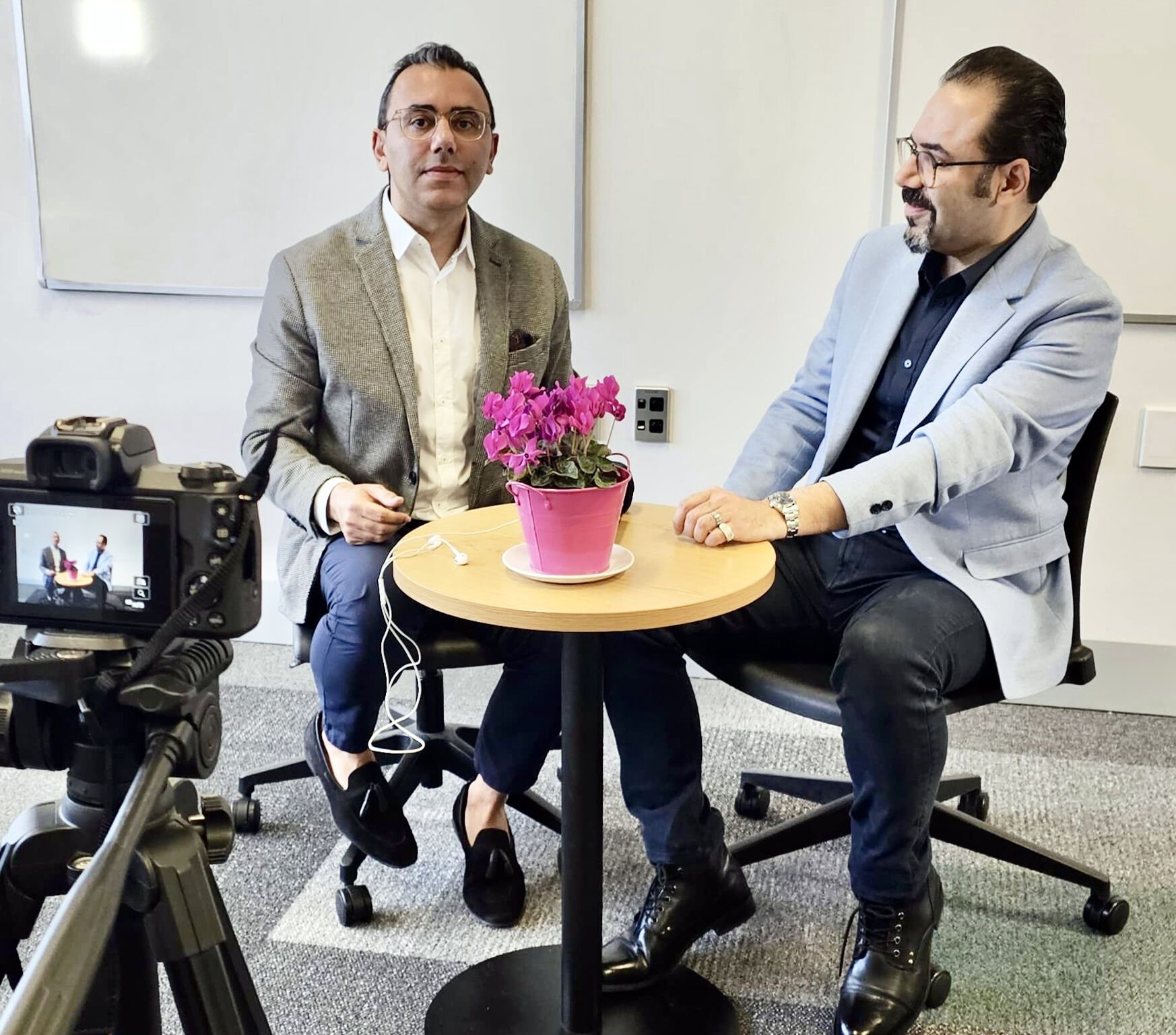
In August 2024 Professor Ghaffarian was interviewed on two projects that together express the School’s view of New Zealand’s urban future. The first, Smart Mobility as a Sustainability Enabler for New Zealand, builds on the team’s earlier research on operationalising the smart city concept for Auckland. It applies advanced technologies and data driven planning to optimise urban mobility, reduce carbon emissions and improve liveability, treating mobility as a lever for sustainability rather than only as the movement of vehicles. The second, Developing a Digital Twin Model for Urban Microclimate of Auckland: Kaitiakitanga 1.0, models the city’s microclimate so that predictive analysis and real time decision making can enter urban planning. Its name invokes kaitiakitanga, guardianship, and the aim of development that safeguards the environment for future generations.
The Case Made in Interview
The interview’s central proposition was that transport and microclimate, usually studied by separate disciplines, shape each other. Road space, traffic and sealed surfaces drive urban heat; heat and wind in turn decide whether people walk, cycle or wait at a bus stop. A city that wants people out of cars needs streets that are comfortable to be on, and a city that wants cooler streets needs fewer cars on them. Prof Ghaffarian’s argument was that these are parts of one urban system and should be modelled, planned and governed as such, which is why the two projects were presented side by side rather than as separate pieces of research.
A digital twin is the instrument that makes this integration practical. Once traffic, surface materials, shade, wind and temperature are represented in a single model, planners can test the consequences of a decision before committing to it: how a new cycleway changes exposure to heat, how tree planting alters the comfort of a walking route, or how a change in traffic volumes affects the microclimate of a street. That is the sense in which Kaitiakitanga 1.0 was described, consistent with its stated aim of bringing predictive analysis and real time decision making into urban planning, as a decision tool for a city rather than a visualisation of it.
The interview was also an act of convening. Both projects were funded through the Faculty of Design and Creative Technologies at AUT, and Prof Ghaffarian used the platform to invite partnership from industry, researchers and policymakers, naming Auckland Council, Auckland Transport, the Smart Cities Council and the New Zealand Transport Agency. For research that depends on access to city data, transport models and planning decisions, that invitation is part of the method. Public explanation is how potential partners learn that the capability exists, what it could do for them, and who leads it.
A Decade of Mobility Research
The smart mobility project was the latest stage of a programme Prof Ghaffarian had led for several years. It followed Smart Mobility as Enabler of Smart City Auckland (2021 to 2022) and an AUT funded study, worth NZD 35,000, that defined the smart city characteristics of significance to the New Zealand context. The 2023 Smart Mobility as a Sustainability Enabler award itself carried NZD 50,000. In parallel, the programme moved from a national plan for decarbonising New Zealand’s heavy freight transport in 2020 to an externally funded total cost of ownership comparison for long distance heavy freight for Ara Ake (2022 to 2024), with related studies on smart mobility for freight emissions reduction and on the role of AI in freight decarbonisation in Auckland.
The freight work carried the programme into industry. A 2024 industry research report presented a total cost of ownership case study of Freightways Ltd, and doctoral research on construction logistics examined how integrated planning and transport efficiency could reduce the sector’s emissions. These projects gave the smart mobility agenda something many urban technology programmes lack: evidence on cost, operations and emissions drawn from companies that move goods across the country every day, expressed in terms that operators, investors and transport agencies already use.
The human side of mobility has been equally central. Prof Ghaffarian was primary supervisor of Attiq Ur Rehman’s doctoral thesis on trust dynamics and governance for driverless technology, completed in 2022, which led to the trust based autonomous driving framework for New Zealand published in Smart and Sustainable Built Environment. Kamal Dhawan’s doctorate on construction logistics, which he jointly supervised, produced a research framework for greening construction transport as a sustainability enabler. The interview therefore spoke from a record that spans passenger mobility, freight and autonomy, and from a research group that had already trained the specialists such a programme requires.
From Campus Model to City Twin
Kaitiakitanga 1.0 has a similar lineage. The line of work began with a digital twin of the AUT City Campus in 2022, presented at the 22nd International Conference on Construction Applications of Virtual Reality, and became the 2024 Endeavour Fund proposal for an urban microclimate twin of Auckland. Its scientific base was built through doctoral research Prof Ghaffarian jointly supervised with Professor Amirhosein Ghaffarianhoseini, including Saghar Hashemi’s 2024 thesis on microclimate and outdoor thermal comfort in Auckland, which produced the summer outdoor thermal risk mapping of an Auckland university campus, and a Vice Chancellor’s Doctoral Scholarship for research on a digital twin for the wind resiliency of Auckland from an urban microclimate point of view.
The governance question followed naturally. Urva Patel’s doctorate on digital twins, wellbeing and the Living Standards Framework produced a review of digital twin technology for sustainable urban development and SDG 11 in New Zealand in Cities, and the argument that urban twins should serve citizens as well as asset managers, developed in a related Voice entry. The same line now underpins a 2026 Transition Research Fund expression of interest and Prof Ghaffarian’s proposal for a new CIB Task Group on digital twin governance, approved in principle by CIB. An interview in 2024 described the early form of what has become an international agenda.
Research Leadership and Its Consequence
At the time of the interview Prof Ghaffarian was Head of Built Environment Engineering and Leader of the Smart Cities and Infrastructure Research Cluster, roles that joined research direction to departmental resources. That combination explains the interview’s confidence: the projects were not isolated grants but parts of a portfolio being built across mobility, microclimate, digital twins and AI, supported by AUT funding and doctoral scholarships and aimed at the agencies that plan Auckland. It also explains the emphasis on partners. Smart mobility and urban twins become useful only when councils, transport agencies and industry adopt them, so the case had to be made in public, in terms those organisations recognise.
The consequence is visible in what followed. The microclimate twin progressed from campus model to national funding proposals; the governance questions it raised now frame an international CIB initiative led from AUT; and the same mobility programme had already informed Prof Ghaffarian’s expert commentary on Auckland’s draft Regional Land Transport Plan earlier in 2024, as it later informed his analysis of growth and infrastructure on the Hibiscus Coast. For the School, the interview demonstrated a model of research leadership that names its partners, explains its purpose to the public and connects the measurement of a city to the decisions that shape it.